

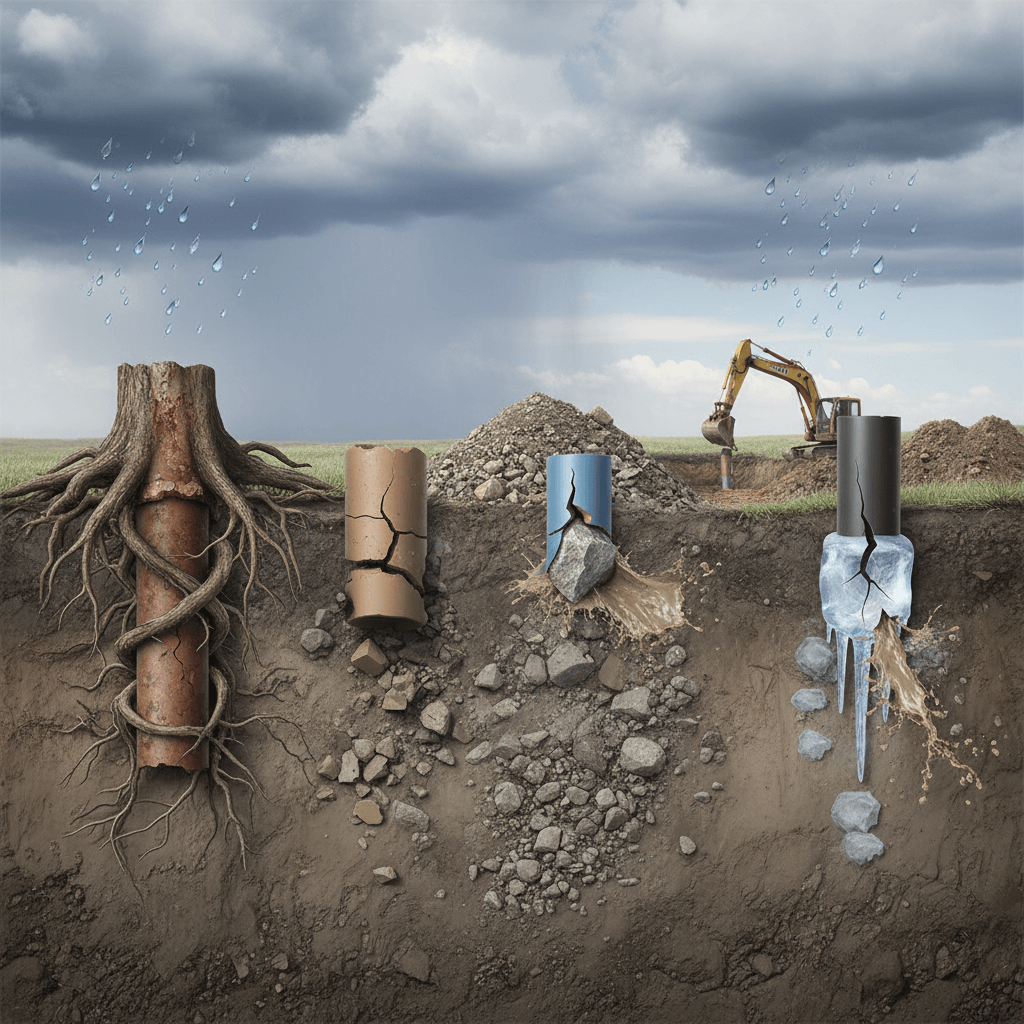
Water line breaks bring big headaches for homeowners and property managers because one burst can flood yards, wreck gardens, or shut off water inside buildings. Learning the most frequent reasons pipes fail helps spot trouble early, plan fixes, and avoid costly disasters. Expect to discover common causes, warning signs, and smart moves to keep water flowing and your property safe. Keep reading to find out how to dodge water troubles before they flood your world.
The information below blends practical tips with real world examples and clear next steps. Whether you manage an older house or a newer development, the same basic factors tend to produce leaks and breaks. Learn how material choices, ground conditions, water quality, pressure, and installation issues all play a role in water line performance.
Common water line failure causes related to pipe material and age
Pipe material and age rank among the top contributors to line failure. Different materials age in different ways and under different timelines. For example copper can corrode where aggressive water chemistry exists, while older galvanized steel tends to rust from the inside and reduce flow. Polyvinyl chloride and cross linked polyethylene may crack if exposed to sunlight or buried above proper depth.
- Galvanized steel Most galvanized lines installed before the 1960s develop internal corrosion and reduced diameter over time.
- Copper Copper resists rust but can suffer pitting corrosion with highly acidic or alkaline water conditions.
- Plastic Plastic piping can be flexible and long lasting but is vulnerable to UV damage and certain solvents that may be present in soil.
Typical lifespan ranges vary by material and site conditions. Rather than relying on dates alone, watch for signs of degradation and plan replacement if problems appear.
Soil and ground movement as hidden causes of failure
Ground conditions place continuous stress on buried water lines. Soil that shifts during wet and dry cycles, poorly compacted backfill from construction, or heavy loads above the trench can all cause pipes to crack or joints to separate. In areas with expansive clay soils, freeze thaw cycles, or frequent vibration from nearby traffic, these pressures increase.
How tree roots invade pipes
Using examples from suburban yards, tree roots seek moisture and can wrap around joints or enter through hairline cracks. Roots may cause slow leaks that worsen over months, or sudden ruptures if the root mass moves or the joint gives way.
Signs of ground related stress
- Sudden changes in yard elevation or sinkholes
- Hairline cracks in concrete slabs above the pipe
- Localized soggy spots without surface drainage explanation
Corrosion and chemical attack in water line failure causes
Corrosion happens when metal pipes react with water components such as oxygen, chlorides, or extreme pH levels. The process is often slow and internal which makes it hard to spot until a major leak appears. In some communities high mineral content or low pH in the water supply accelerates corrosion.
- Internal pitting lowers structural strength and can cause pinhole leaks
- Anode depletion in sacrificial systems reduces protection over time
- External corrosion occurs when soil contains salts, fertilizers, or stray electric currents
Testing water chemistry and checking sacrificial anode systems for depletion helps reduce the risk. Where aggressive water chemistry is present, lining or replacing the pipe with a more tolerant material can extend service life.
Pressure fluctuations and mechanical stress as causes
Water pressure that is too high or that fluctuates rapidly can stress joints and fittings. Pressure surges from pump starts or sudden valve closures create hydraulic shock waves that travel through the system. Over time these pulses loosen fittings, fatigue joints, and lead to failure at weak points.
- High static pressure stresses pipe walls and increases leak rates at joints
- Pressure spikes from pumps or sudden valve action cause fatigue failure
- Thermal expansion in hot water lines adds cyclic stress
Installing pressure regulators and water hammer arrestors reduces the chance of pressure induced failures. Regularly checking the system pressure with a gauge gives a simple early warning indicator.
Poor installation and human error as preventable water line failure causes
Even the best materials fail when installed incorrectly. Common installation related problems include poorly compacted backfill, improper joint techniques, inadequate bedding under the pipe, and incorrect burial depth. Pipes laid across sharp rocks without protective wrap can be punctured, and fittings that are not tightened to specification may separate under load.
- Checked permits and inspections reduce the risk of poor workmanship
- Using appropriate bedding and warning tape above buried lines protects pipes long term
- Mis-sized fittings and mismatched materials create stress points
Working with a qualified plumber who uses industry standard installation methods lowers this risk. If a DIY installation is planned, follow manufacturer instructions for bedding, joining, and backfilling carefully.
Temperature related causes including freeze damage
Freezing is a frequent cause of pipe failure in climates with subfreezing temperatures. Water expands as it freezes and that expansion exerts great pressure on pipe walls and joints. The most vulnerable segments are those near exterior walls, uninsulated crawlspaces, or shallow trenches.
- Insulate exposed pipes and add heat tracing where appropriate
- Keep interior doors closed to maintain warm air around plumbing runs
- During extreme cold, slowly drip faucets to reduce the chance of freezing
Beyond freezing, wide temperature swings cause contraction and expansion which can loosen fittings over time. Proper insulation, burial depth, and temperature control help mitigate this factor.
Detection methods and routine checks to spot early problems
Finding trouble early lets you take small actions before a major failure. Simple checks and monitoring reduce emergency repairs and long term cost.
Visual and sensory checks
- Watch for unexplained wet patches or green, lush areas in the yard
- Listen for hissing or running water when all fixtures are off
- Check water meter with all water turned off to detect slow leaks
Professional inspection tools
Plumbers use video cameras to view inside lines, pressure tests to find weak sections, and leak detection equipment to locate underground losses. An annual inspection provides a baseline so you can spot changes over time.
What to do when you find signs of a failing line and how to proceed
If you encounter the signs described above you have choices. Temporary fixes like patching small leaks buy time but are not always the best long term solution. If aging, corrosion, ground shifting, or repeated freeze related events are present, replacement is often more cost effective than continued repairs.
For practical repair planning check warranty and repair history first. Document the location and symptoms and take photos where possible. When you are ready to hire a trade, ask for cost breakdowns for repair versus full replacement and request references for similar jobs.
If you require professional help for installation or full service, a licensed plumber can evaluate the pipe material, soil conditions, and local code requirements and recommend appropriate action. For example, some homeowners replace older metal lines with modern plastic options to reduce corrosion risk. To explore local options for professional work consider contacting a trusted provider for detailed estimates and scheduling for water line repair and replacement.
Long term prevention strategies to reduce future failures
Prevention focuses on a few repeatable habits and investments. Routine inspections, proper landscaping, pressure control, and choosing the right materials for your soil and water chemistry significantly lower the chance of a surprise break.
- Test water chemistry every few years and treat if aggressive conditions exist
- Keep large tree roots away from your main lines or use root barriers
- Monitor pressure with a gauge and install a regulator if necessary
- Plan replacement on a timeline that reflects material lifespan and site risks
Replacing high risk segments before they fail reduces emergency costs and collateral damage to landscaping and structures. When you plan a replacement, consider future digging needs and install conduit for easier access in later years.
Water line failure causes are varied but follow common patterns. Age and material, soil conditions, corrosion, pressure issues, temperature stress, and installation quality account for the bulk of problems. Routine checks including visual observation, meter monitoring, and professional inspection are low cost steps that detect issues early. For many property owners, taking modest actions such as installing a pressure regulator, insulating exposed lines, and choosing corrosion resistant materials prevents the most frequent failures.
If you discover signs of damage act sooner rather than later. Early intervention reduces repair complexity and cost and limits the damage to landscaping and foundations. Contacting a qualified plumber for a site specific evaluation gives you options that match your budget and long term goals. Schedule an inspection, get multiple written estimates where feasible, and weigh repair versus replacement based on material condition and the likelihood of future problems. Taking these steps keeps water flowing and protects the value of your property.
